Jeans are the one frontier of the universe of pants where achieving a clean drape is arguably the most difficult, and I’ve been fielding a few questions lately regarding how to do so. I implement a few principles I learned when working as a fitter in the tailoring space, enormously helpful to me but also information that isn’t necessarily easy to come by without having been on the buy side or sell side of said industry for a while.
The ideal pattern for jeans with a clean silhouette through the legs is a holistic concept with a few key zones that respond to each others’ happiness or lack thereof; an issue in one area can cause more problems closer to the ground. This concept works for a variety of cuts, so you’re not limited to wearing wide straight legs (though those are my own Platonic ideal). I’ve had success with regular straight, flared, bootcut and slim-ish tapered styles, all while having knock knees. The only thing really off limits for this is skinny jeans, unless you have the requisite skinny legs.
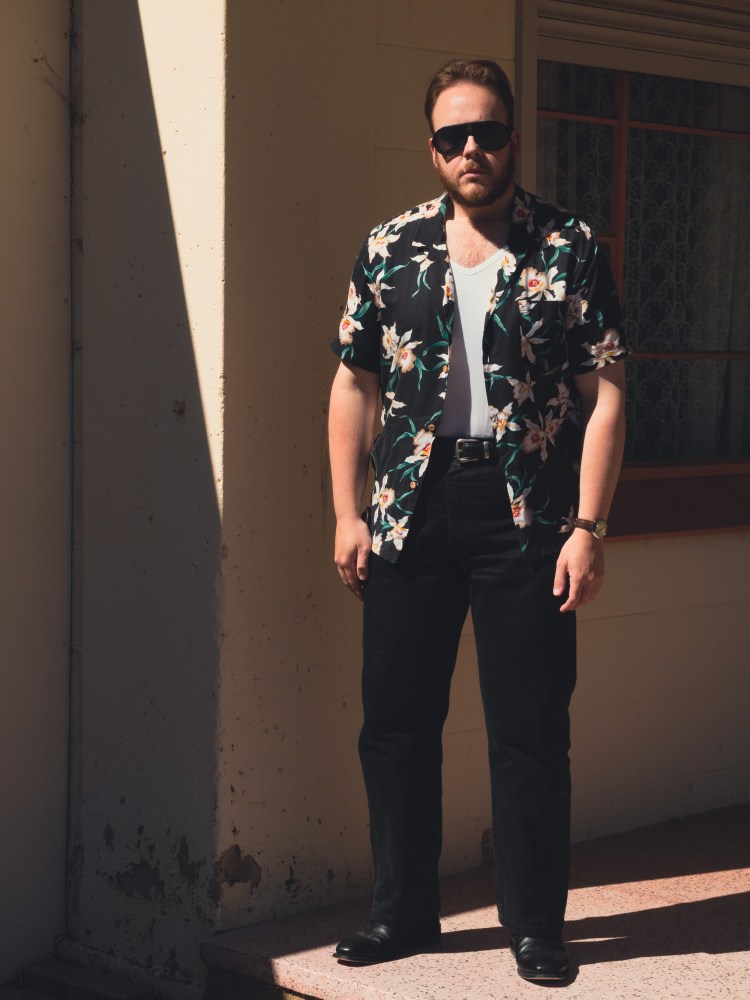
Before we dive in, here are two examples of mine with nice clean leg silhouettes:

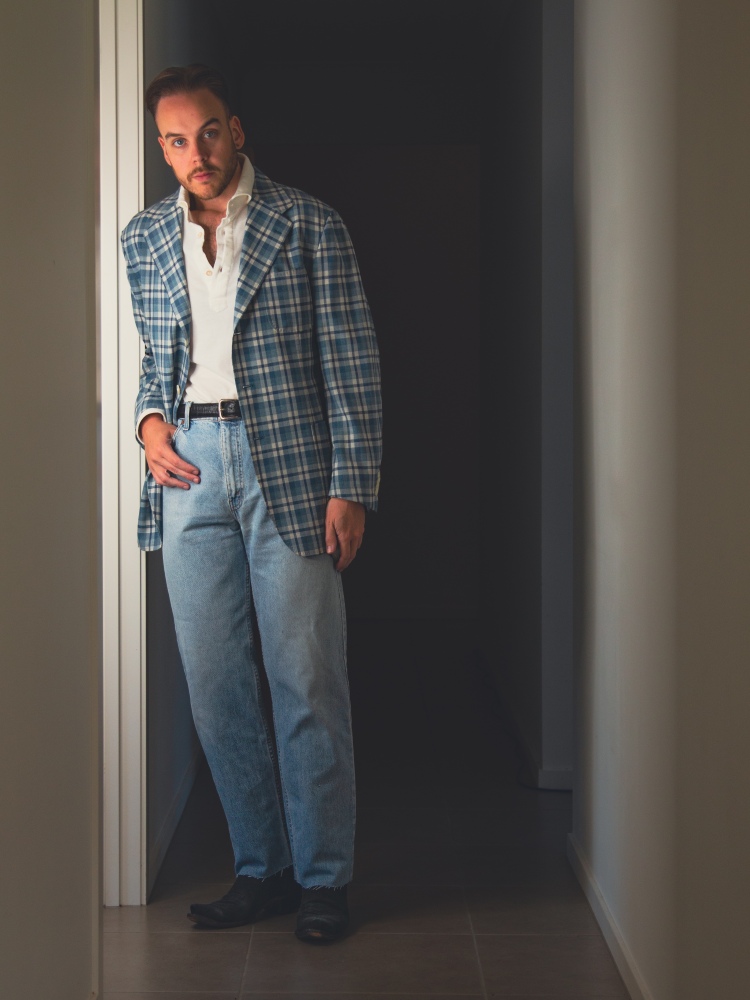
With a basis to work from, here are the main problem spots that cause unwanted distortions and messiness in the fit of your jeans, with examples of the symptoms.
Back Rise and Front Rise
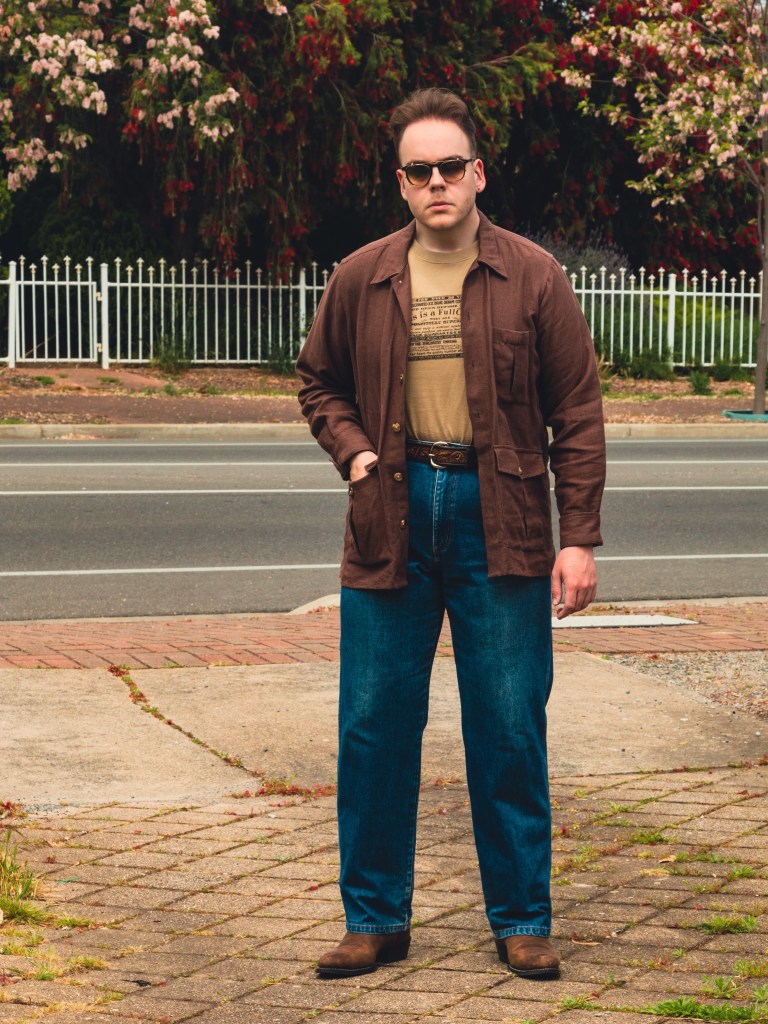
Having the front and back rise measurements spot on is just as important for jeans as any other pants, and it has an effect on the way the legs drape too. If the back rise is too long, the whole back panel of the jeans wants to sag down and crumples in various spots throughout the garment. Likewise, a front rise that is too long will cause the same but with the distortions happening down the front. The ratio between front and back rise needs to be just right; if you can’t find a pair that aces this ratio, a competent tailor can help if your best pair of jeans almost makes the cut. Back rise is generally easier to manipulate than front rise.
Seat Width
I’ve found that the seat should generally be on the more snug side when going for a clean drape. Too loose and you’re likely to have some collapsing happen at the outseam, which distorts the drape for the entire leg. This usually goes hand in hand with the waist issue, however some jeans can be perfect in the waist and still need some tweaks through the seat.

Knee and Hem Width
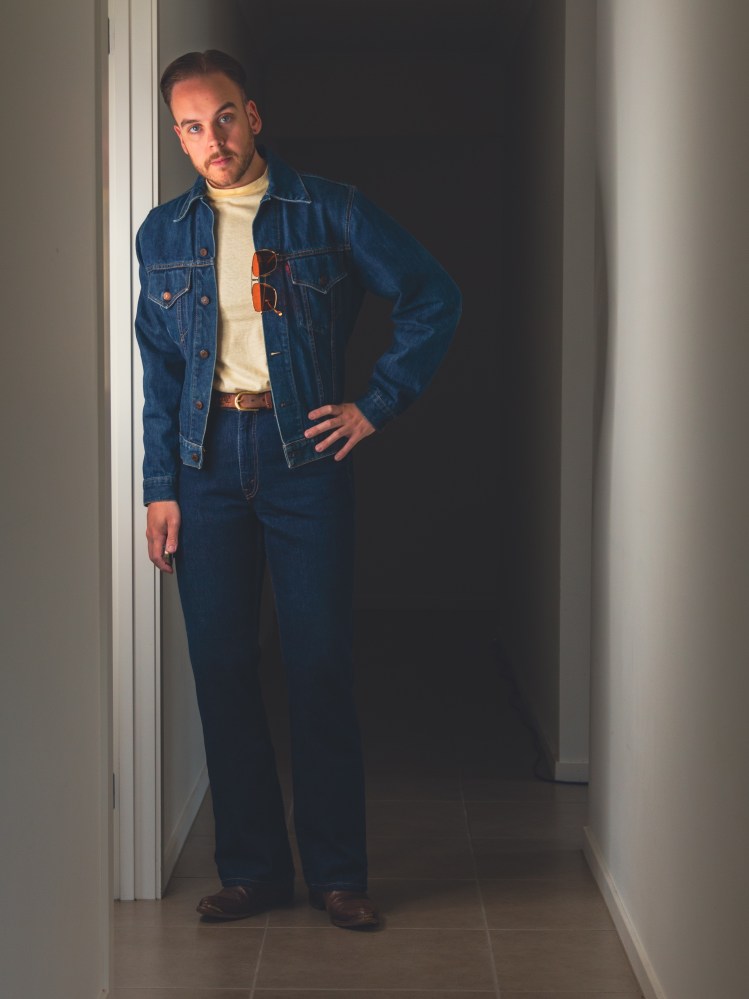
To achieve a clean drape through the leg with your denim, you’ll need it to be on the looser side through the leg. If the leg grades too narrow through the knee, you’ll find the jeans leg distorts at the bottom of your thigh, and/or closer to the knee itself if you have knock knees or bow legs. While this is sometimes caused by the fabric catching on the shape of your knee area, it can also be caused by the pattern itself. If the thigh is too wide in relation to the knee, the fabric can exhibit bagging just above the knee.
Likewise, a taper that grades too aggressively towards the hem will catch on your calves and ruin the leg silhouette, or cause bagging at the transition points above if the grading of the pattern has issues.

Hem Length
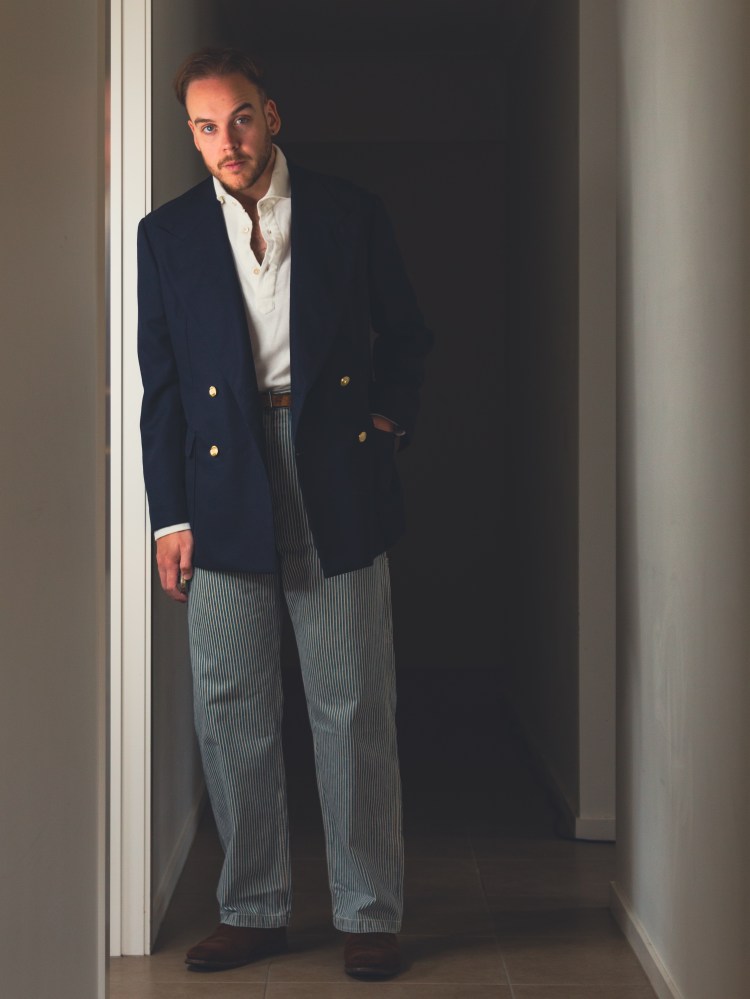
Denim isn’t a cloth known for inherent drape properties, so having any break at your hem is likely going to spoil the clean leg line you’re after. I’ve found that simply rolling them up once or twice produces a less than desirable effect also, so hem those jeans to a length that just hovers on the top of your instep (also known as a shivering break). Whether you give it a clean stitch job or hack the hems off with a pair of scissors, both achieve the same end with different stylistic results.
Waist Size
If the waist of your jeans is too large, you’re likely to experience collapsing on all panels as they move about with you. This leads to various combinations of the problems listed above; distortions from a sagging seat, or problems stemming from front or back rise collapses. Given that pure cotton denim tends to give at the waist as you wear it throughout the day, it’s best to have your jeans waist fairly snug. And wear a belt – just because they stay up at the start of the day doesn’t mean they still will after a couple of hours!

A Caveat to Conclude:
The reality of cotton denim is this: even if you hit a home run with the fit of your jeans, the fabric will rumple and loosen in various areas as you perform different activities throughout the day. Your perfect leg line will inevitably be distorted once you’ve sat in a chair for a couple of hours, and you’ll have some wrinkles through the front panel at the seat. This is just the nature of denim, so embrace it – if you want the shape back, hang your jeans up when you get home (I use pant hangers with soft alligator style clips and hang them from the hems), letting gravity return them to their clean and sharp state over a night or two.

Additionally, don’t worry if your jeans don’t cut the perfect shape to begin with, as they won’t do so for much of the day anyway. Try and get your pair(s) near enough to good enough, so that you can give them a little bit of manual adjustment to have them looking clean and snappy in your photos (e.g. cinching a bit of the waist at the back), and go about your day.
Happy jeans hunting!
*Author’s note: for best results stick to non-stretch denims, generally made from 100% cotton, sometimes blended with hemp, linen or other natural fibres. Stretch denim, in my experience, is immune to draping properly.

 SamTalksStyle
I 100% agree. I thrift all of my jeans and tailored trousers and I usually just size up and have them tapered and hemmed accordingly.
LikeLike